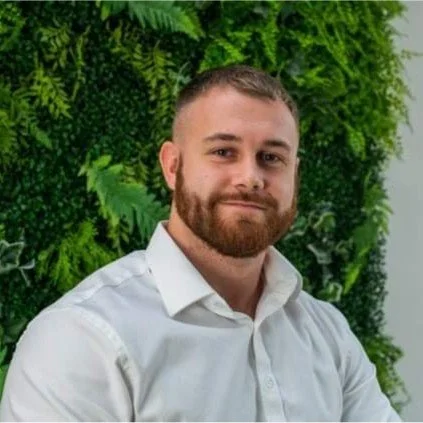
Rob Wilkinson, founder and CEO of GRC Hub, is our guest in this edition of our Ace Founder Spotlight Series.
With a background in data protection and commercial business, Rob launched GRC Hub to help organizations navigate the complex, often overwhelming world of cybersecurity governance.
Rather than just handing clients a compliance checklist, his team focuses on delivering real-world outcomes that fuel business growth—whether that means saving enterprises hundreds of hours on data requests or helping charities safely engage with their donors.
I sat down with him for our cybersecurity month to discuss why businesses struggle with compliance, the dangers of letting AI make critical decisions, and why a consultative approach still wins in a market saturated with automated software.
Both questions and answers have been lightly edited for length and clarity.
The Conversation
Could you tell us a little bit more about you and the work you do?
My name is Rob Wilkinson, and I'm the founder and chief executive at Governance Risk and Compliance Hub, trading as GRC Hub.
I actually fell into cyber. I studied business at Leeds Beckett, met a gentleman at a degree fair, and ended up spending seven years in a data protection firm, climbing the ranks with a commercial background rather than a technical one.
I left last year, went traveling in South Africa, and realized I couldn't leave the cybersecurity industry—it's too infatuating.
We set up GRC Hub as a team of five. We focus on the governance side of cyber, delivering solutions like ISO 27001, PCI DSS, and SOC 2, and we are very much focused on getting clients tangible outcomes.
What type of clients do you typically work with?
I have a background in social housing, so naturally, people gravitate towards what they know.
But we solve problems for a variety of industries, including the highly regulated not-for-profit space and some large enterprises.
We tend not to work with pure micro-businesses—like a one-person dog walking company—because their proportionate cyber needs are usually just getting anti-malware on their devices.
On the other end of the scale, as a first-year business, huge global corporations usually like to work with other huge corporations.
We focus on understanding the business context of clients in the middle who truly need tailored governance.
Is AI something that excites you, or is it a risk to business?
It's an evolution. If you look back at technological revolutions—like Blockbuster and Netflix—failure to adapt means you get left behind. There is no harm in using AI if it's used in the right way.
My perception is that you can use it provided you aren't using it to make critical decisions. Everything we use AI for internally is overseen by a human.
You have to treat it like a PA, where you oversee what they do. If we envelop a position where AI starts making decisions and processing feelings, we are in a position of risk.
The human population has to retain a degree of control.
What makes you different from your competition out there?
Our tagline is: "We don't just deliver frameworks, we deliver outcomes that fuel business growth."
Everything we do is designed to get the client an outcome based on what makes their specific business tick.
A lot of the GRC industry is moving heavily toward automation and software-as-a-service solutions. While we have access to varying tools, we recognize that SaaS doesn't work for everyone.
There is still a massive space for people who just want to pick up the phone, deal with a consultant, and get advice tailored to their context, rather than being shoehorned down a "here is your template" approach.
What kind of real-world outcomes can clients expect when they work with you?
People like to see numbers and savings. For example, we recently worked with a large enterprise client who was getting increasing volumes of Subject Access Requests (SARs) from their employees, and they had a very immature process for dealing with them.
We brought our team in and overhauled that process. The net result was that they saved hundreds of hours simply on two requests, just through the correct use of searches, filtering, and applying new data protection rules.
We've also worked with charities to help them unlock donor engagement—allowing them to contact their donors without fear of breaching regulations so they can generate the revenue needed to run their charity.
What is one final tip you would give a founder looking for GRC help?
Get in touch and have a chat. Everything starts with a conversation. We are very personable and honest; we will either be able to help you, or we will signpost you to someone who can.
The cybersecurity industry is quite a close-knit community, and people know one another. So just start the conversation.
Our Closing thoughts
Rob’s insights remind us that in an increasingly automated world, personalized expertise and human oversight remain critical—especially in cybersecurity. Key takeaways include:
Seek Outcomes, Not Just Checklists: True governance isn't about shoehorning your business into a rigid template; it's about building secure processes that actually fuel business growth and save operational hours.
Keep Humans at the Helm of AI: AI is an incredible tool for efficiency, but it must be treated like an assistant. Critical business and security decisions require human context and oversight.
Find the Right Fit: Cybersecurity needs scale with your business. Don't overcomplicate security if you are a micro-business, but don't settle for basic software if you handle highly regulated data.
Leverage the Cyber Community: The security industry is highly collaborative. If a consultant isn't the right fit for your specific niche, they can likely refer you to a trusted partner who is.
Connect With Our Guest
Follow Rob Wilkinson on LinkedIn and learn more at grc-hub.co.uk